

Biology is fundamental to our changing world. The 21st century challenge for our students, our scholars, and the greater society is to understand our place in this changing world and to create fundamental knowledge for informed policies, economies, and social structure.
Upcoming Events
Complex Probabilistic Models in Evolutionary Biology: Challenges and Opportunities
Dr. Sebastien Roch, University of Wisconsin, Madison
Abstract: The reconstruction of species phylogenies from genomic data is a key step in modern evolutionary studies. This task is complicated by the fact that genes evolve under biological…
The tempo of adaptation to agriculture across timescales in weeds and crops
Dr. Julia Kreiner, University of Chicago
Abstract: Genomic time-series data from natural and cultivated populations are increasingly being recovered from herbarium and archeological records. These resources provide the opportunity to directly observe…
Nuclear compensatory evolution driven by mito-nuclear incompatibilities
Dr. Débora Princepe
Abstract: The mitochondrial DNA (mtDNA) plays a fundamental role in cell respiration and the maintenance of eukaryotic life. However, respiration also requires proteins encoded in the nuclear…
News

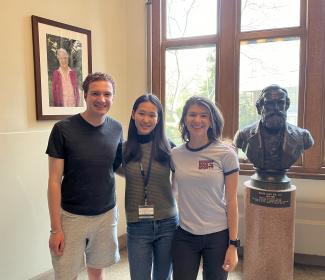
Jessica Wojick selected for Penn Grad Talks
Feb. 20, 2024
Read More







Junhyong Kim Named Christopher H. Browne Distinguished Professor of Biology
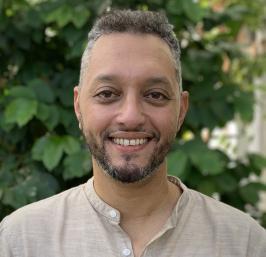
Junhyong Kim has been appointed the Christopher H. Browne Distinguished Professor of Biology.
Michael Lampson elected 2024 AAAS Fellow
Michael Lampson, and 5 other researchers from the School of Arts & Sciences, School of Engineering and Applied Science, Perelman School of Medicine, Wharton School, School of Nursing, and Annenberg School for Communication join a class of scientists, engineers, and innovators spanning 24 scientific disciplines are elected AAAS Fellows.George Morcos wins 2024 Rose Undergraduate Research Award
The Center for Undergraduate Research and Fellowships (CURF) and the Rose Award Faculty Selection Committee is pleased to announce that George Morcos' project under the direction of Prof. Koumenis, “Investigating Mechanisms of Salivary Gland Tissue Sparing in Response to Ultra-High Dose-Rate “FLASH” Proton Radiotherapy,” has been selected to receive a 2024 Rose Undergraduate Research Award.
Emanuel Barrett wins a coveted spot in Penn’s Johnson Scholars Medical Program
Few academic honors carry the weight and prestige of the Johnson Scholars Medical Program at the University of Pennsylvania. Acceptance into this rigorous program signifies exceptional talent and a dedication to the field of medicine. This year, that honor belongs to Emanuel Barrett, a brilliant and driven student who has impressed everyone with his passion for healing and his unwavering commitment to academic excellence.
Bringing cognitive science in action to young minds
Penn Upward Bound high school students from West Philadelphia got a tour of the Penn Smart Aviary, GRASP Lab, and the Penn Vet Working Dog Center during a visit to Pennovation Works.